
A Closer Look at Faux Rock Wall Panels and How Imitation Stone Is Used in Modern Canadian Homes
Stone has always had a way of changing how a space feels. Even a small section of stone can make a room seem more grounded or give an exterior wall a sense of weight that siding alone doesn’t create. But real stone isn’t always practical. It’s heavy, expensive, and sometimes simply not compatible with the structure of a home. That’s why faux rock wall panels and other forms of imitation stone panels have become so common in both renovations and new builds.
Stone has always had a way of changing how a space feels. Even a small section of stone can make a room seem more grounded or give an exterior wall a sense of weight that siding alone doesn’t create. But real stone isn’t always practical. It’s heavy, expensive, and sometimes simply not compatible with the structure of a home. That’s why faux rock wall panels and other forms of imitation stone panels have become so common in both renovations and new builds.
If you look at the geological background of stone itself—how it forms and why it has such varied appearances—Wikipedia has a concise overview worth reading:
https://en.wikipedia.org/wiki/Stone
It helps explain why natural stone looks the way it does and why reproducing it convincingly is such a challenge.
Modern faux panels don’t try to behave like real stone; they simply aim to look like it. They’re usually molded from actual stones, so the irregularities and textures you see are taken directly from natural surfaces. What changes is the weight. Instead of hundreds of pounds per square foot, these panels weigh a fraction of that, which means they can go on almost any wall that can hold basic siding.
Where People Tend to Use Imitation Stone
One of the more common places faux stone shows up today is indoors. A fireplace is an obvious example, but it doesn’t stop there. Basement accent walls, stairwell features, or even the wall behind a TV can take on a whole new mood when covered with something textured. Smooth drywall works fine, but it doesn’t really create visual depth.
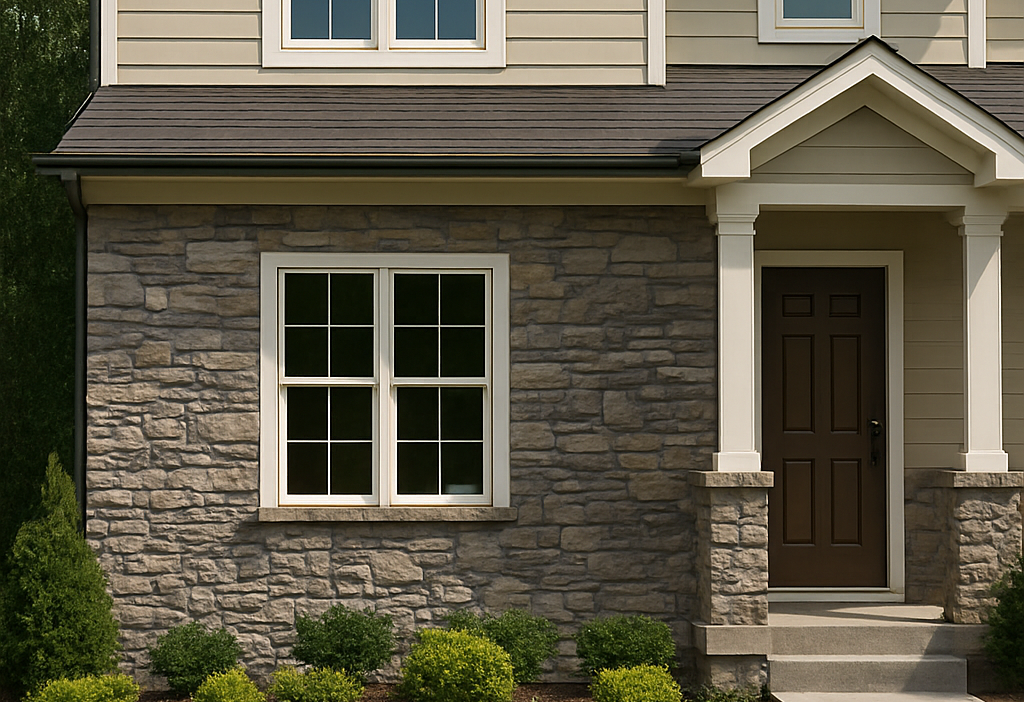
Outdoors, faux rock siding has become a simple way to break up long stretches of vinyl or composite siding. Even a small band of stone under a front window or along a porch column changes the overall look of the house. Because the material is lightweight, it doesn’t require the structural accommodations that real stone would.
People also appreciate that imitation stone offers a consistent appearance. Natural stone is beautiful but unpredictable. You never quite know what you’re going to get from one pallet to another. Faux panels are manufactured with controlled colouring, making it easier to plan a design without worrying that half the wall will be darker than the rest.
Why Homeowners Gravitate Toward Faux Rock Wall Panels
It’s not usually because they’re trying to cut corners. More often, it’s because they want the look of stone but don’t want to rebuild parts of their home just to support it. Real stone is heavy. Installing it above a first floor, around a tall interior feature wall, or on older framing can be complicated and expensive. Faux panels sidestep that issue.
There’s also the matter of installation. While you still need to know what you’re doing, applying imitation stone doesn’t require the same level of specialized masonry skills. Panels fit together, edges are trimmed, and seams are hidden. It’s still work—but it’s approachable work.
Some homeowners also enjoy using it as a sort of design experiment. They’ll try a small project first, like a fireplace or a small exterior section, just to see how it changes the space. Often, that leads to bigger ideas later.
How the Material Behaves Over Time
Because imitation stone doesn’t expand or contract in the same way natural stone does, it holds up well as long as it’s installed properly. Moisture management is still important, especially outdoors, but the lightweight nature of the panels reduces strain on the wall system.
Indoors, there’s very little to worry about beyond basic cleaning. A soft brush or a mild soap solution is usually enough. The panels don’t require sealing, polishing, or resurfacing.
A Useful Resource for Canadian Builders and Homeowners
For anyone in Canada who wants to see what modern faux stone panels look like in different applications—exterior siding, interior feature walls, or smaller decorative uses—there are examples and product references available here:
https://nextstonecanada.com
Browsing real installations is often the best way to understand what the material can do. Sometimes a style that looks plain in a sample photo ends up being the perfect fit once you see it applied to a full wall.
Faux rock wall panels and imitation stone panels are not replacements for natural stone in every situation. They simply occupy a different role—one based on flexibility, weight, and practicality. They allow homeowners to introduce textures and shadows into areas where stone would never have been an option. Whether used sparingly or across a whole section of siding, these panels create a sense of dimension that flat materials don’t provide.
They’re a reminder that you don’t always need the original material to achieve the original feeling.